
In Nova Scotia, we tend to romanticize the way our homes age. We call it “patina” and the fading shingles “character.”
It usually starts as a faint shadow on the north side of your roof, eventually stretching into long, dark ribbons that look like soot or oil. Most of us ignore it for a few seasons, chalking it up to Father Time.
But those streaks aren’t just a sign of time passing. They are alive and eating your roof.
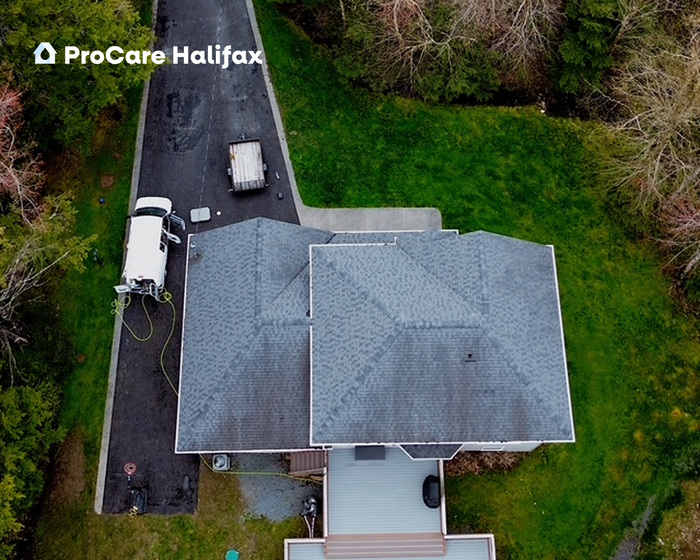
So, what are those black streaks
The culprit is a hardy, airborne cyanobacteria called Gloeocapsa magma. It travels on the wind, landing on rooftops from Cape Breton to Yarmouth and everywhere in between. While it might look like dirt, it’s actually a sophisticated organism that has found its favourite meal right above your head.
Modern asphalt shingles are manufactured with limestone filler to add weight and durability. To Gloeocapsa magma, your roof is an all-you-can-eat buffet. It anchors itself into the granules and begins to feast on that limestone. The black colour you see is actually a protective pigment that the bacteria produce to shield themselves from UV rays. It is, quite literally, sunblock for a parasite.
Why Nova Scotia is the Perfect Environment
Nova Scotia is home to over 13,300 km of coastline. The very things we love about the East Coast, the morning fog rolling over the basin, the salt-heavy air at Peggy’s Cove, and the rhythmic, relentless rain of a classic East Coast spring, are exactly what this bacteria needs to thrive.
- The Humidity: Algae need moisture to reproduce. Our high humidity levels mean your roof stays damp long after the sun comes out.
- The Shade: If your property has beautiful old trees, the shade they provide prevents the roof from drying, creating a microclimate where bacteria can spread undisturbed.
- The Salt Air: While the salt air is iconic, it doesn’t kill this specific growth. It only adds to the complex cocktail of environmental stressors on your exterior.
The Myth of “It’s Just Cosmetic”
It is tempting to view these streaks as a purely aesthetic nuisance. As the bacteria consume the limestone filler, the shingles become lighter and more brittle. They lose their ability to reflect heat, which can lead to higher cooling costs in the summer and a roof that fails years before its warranty should expire.
The DIY Approach to Roof Cleaning
In Nova Scotia, the DIY spirit is practically a personality trait. We like to think that with enough hours spent on YouTube, we can conquer just about anything. And honestly, you can clean your own roof. You can head down to Home Depot, pick up a jug of cleaner, and spend your Saturday wrestling with a pump sprayer. The problem is that most store-bought solutions only scratch the surface. If you don’t get deep enough to hit the root of the problem, you are just giving the bacteria a haircut.
Using high pressure on roof shingles is like trying to clean a wool sweater with a weed whacker.
And then, there is the matter of the DIY roof “pressure wash.” In a moment of sheer frustration, it is tempting to reach for the heavy machinery to blast those streaks into oblivion. Please, don’t. Using high pressure on roof shingles is like trying to clean a vintage wool sweater with a weed whacker. You will certainly remove the black marks, but you’ll also strip away the protective granules that are the only thing standing between your attic and the Atlantic weather. It is a very loud, very expensive way to realize that sometimes, force isn’t the answer.
Hiring a Professional Roof Cleaner
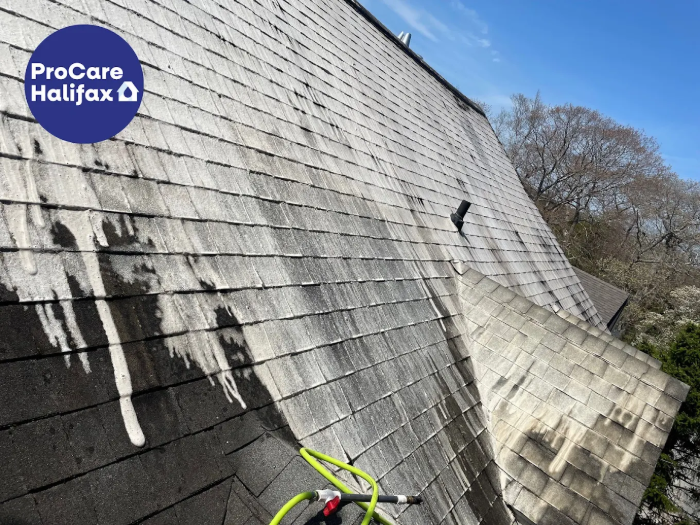
The goal of a professional cleaning isn’t to fight the roof, but to neutralize the growth. We use a method called soft washing. It involves a low-pressure application of a specific solution that kills the Gloeocapsa magma at the root.
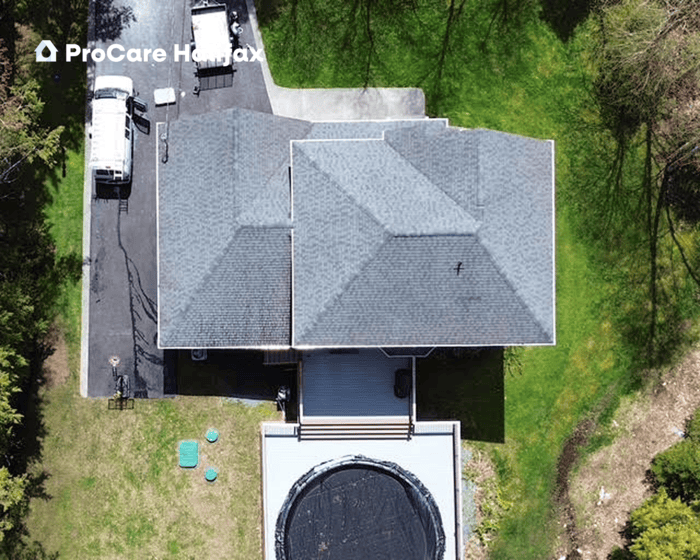
Think of it as a medicinal treatment for your house. By eliminating the living organism, we stop the damage to the shingles without the collateral damage of high-pressure water. The results aren’t just about curb appeal; they are about extending the life of your investment.
Our Final Word
Those black streaks are a living part of the Nova Scotia landscape, but they don’t have to be a part of your home. Addressing them now is the difference between a simple afternoon of maintenance and a very complicated, very expensive roof replacement down the road.
The choice, as always, is yours. We’re just here to make sure you have a roof left to make it.
Take the Next Step
If you are tired of watching those streaks spread, we are here to help. You can explore our specific methods or request a free professional assessment through the links below:
- Our Roof Cleaning Process: Learn more about the science of soft washing and how we protect your shingles.
- Siding & Exterior Washing: Discover how we handle organic growth on siding, gutters, and more.
- Get Your Free Estimate: Get a direct, transparent estimate for your home’s specific needs.