
How Much Does it Cost to Have Your House Washed in Halifax?
If you are trying to understand how much house washing costs in Halifax or Nova Scotia, you are not alone. Pricing can vary widely, and online estimates are often vague or misleading.
This guide explains what homeowners can realistically expect to pay for house washing, what affects the cost, and how to evaluate whether professional house washing is worth the investment for your home.
The Average Cost of House Washing in Halifax
For a standard 2,000 sq. ft. home with vinyl siding, moderate buildup, and good property access, you can expect to invest around $425.
| House Type | Approx. Square Footage | NS Price Range |
| Bungalow / Small homes | Under 1,500 sq. ft. | $250 – $450 |
| Average homes | 1,500 – 2,500 sq. ft. | $450 – $650 |
| Larger or more complex homes | 2,500 – 4,000+ sq. ft. | $650 – $950+ |
Larger properties, homes with multiple elevations, heavier organic growth, or siding types that require additional care, such as cedar, stucco, painted wood, or specialty finishes. This category can also include homes with mature landscaping, limited access, or increased runoff management needs.
What Actually Drives the Price?
House washing is not priced by square footage alone. Several real-world factors affect how long the job takes, how much product is required, and how carefully the work must be done.
- House size and layout: Larger homes require more time and more solution. Complex layouts, attached garages, or multiple exterior sections increase setup and treatment time.
- Number of storeys: Two and three-storey homes require different access methods and additional safety considerations, which directly affect labour time.
- Siding material and condition: Vinyl, wood, composite, and painted surfaces all respond differently to cleaning. Older or more delicate siding often requires a gentler, slower approach.
- Severity of organic growth: Light surface dirt is very different from years of algae or mildew buildup. Deeper growth requires stronger treatment and longer dwell time.
- Landscaping and runoff management: Homes with gardens, mature landscaping, or sensitive surrounding areas require additional protection and controlled runoff planning.
- Access and surroundings: Tight spacing between homes, sloped properties, fencing, or limited access points can increase setup complexity.
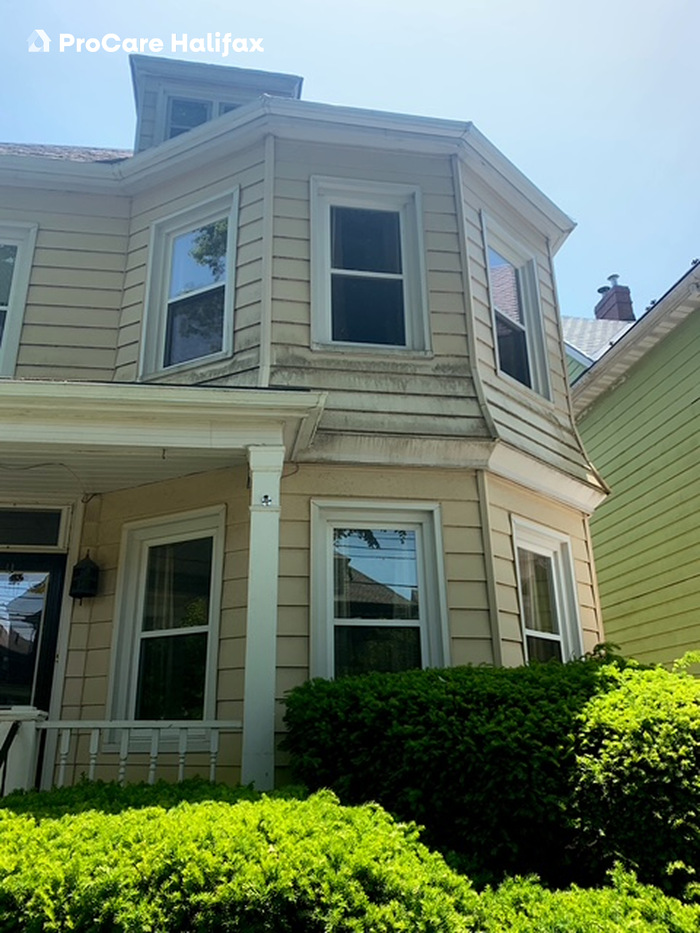
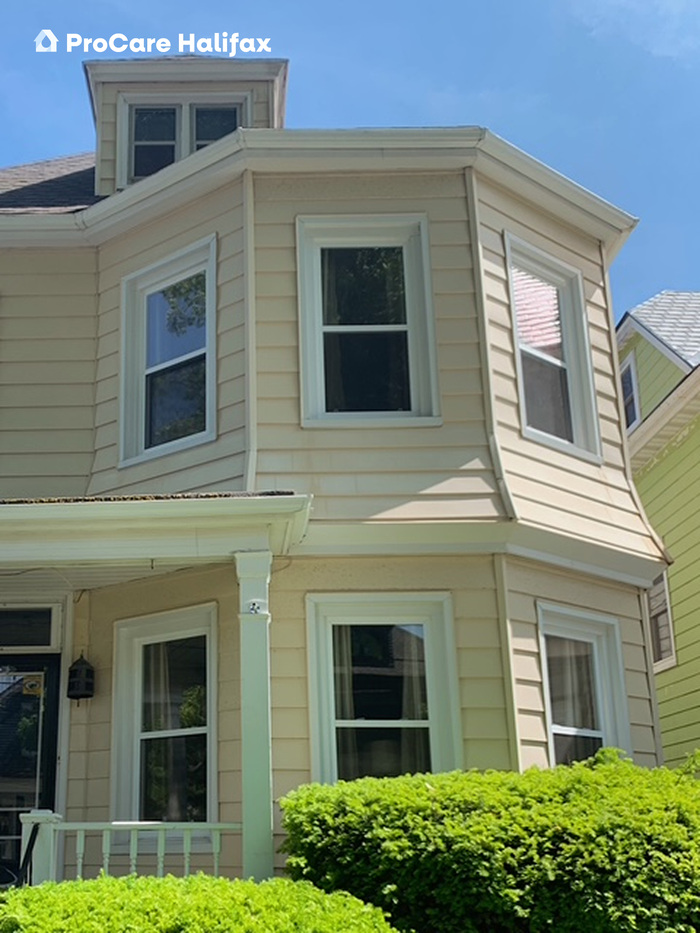
DIY House Washing vs Professional Service
Some homeowners consider washing their house themselves using store-bought cleaners or rented equipment. While this can temporarily improve appearance, it often comes with limitations and risks. Common DIY challenges include:
- Uneven results or streaking
- Incomplete removal of organic growth
- Damage to siding or finishes
- Water intrusion behind siding
- Safety risks from ladders and wet surfaces
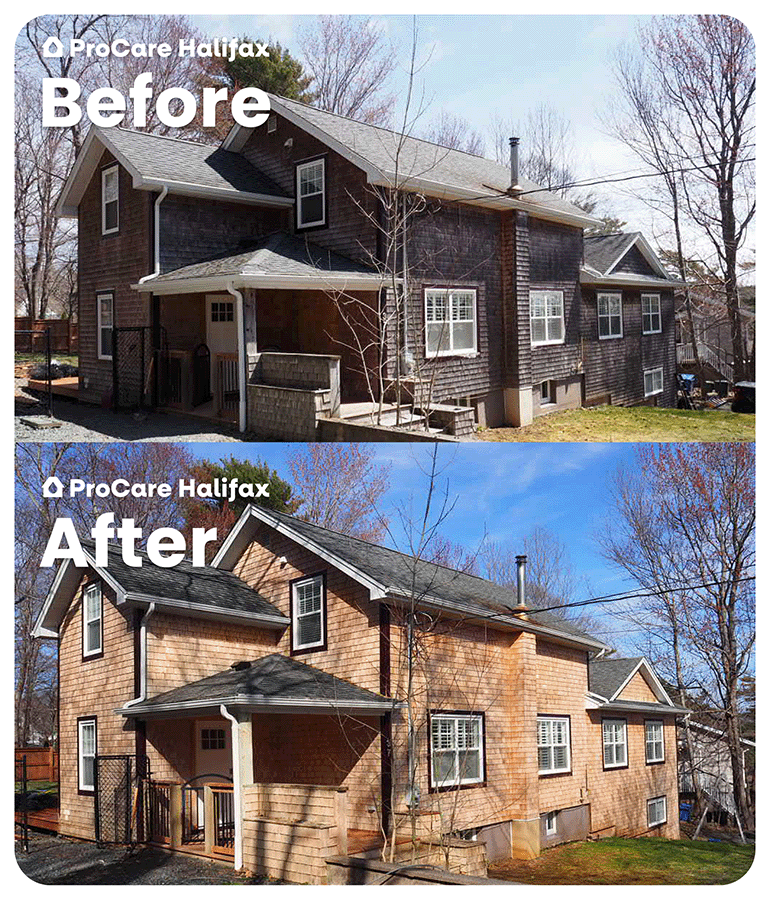
Is Professional House Washing Worth the Investment?
For most Halifax homeowners, yes. House washing:
- Restores the appearance of siding
- Slows the return of organic growth
- Protects exterior finishes
- Supports long-term material performance
- Delays costly repainting or replacement
Questions to Ask Before Hiring a House Washing Company
Before choosing a provider, homeowners should feel comfortable asking:
- What cleaning method do you use for siding?
- How do you protect landscaping and surrounding surfaces?
- Are you insured? Registered? BBB Accredited?
- Can you provide examples of recent work?
- How do you handle runoff and drainage?
- Will you tell me if my siding should not be washed?
Clear answers matter more than fast quotes.
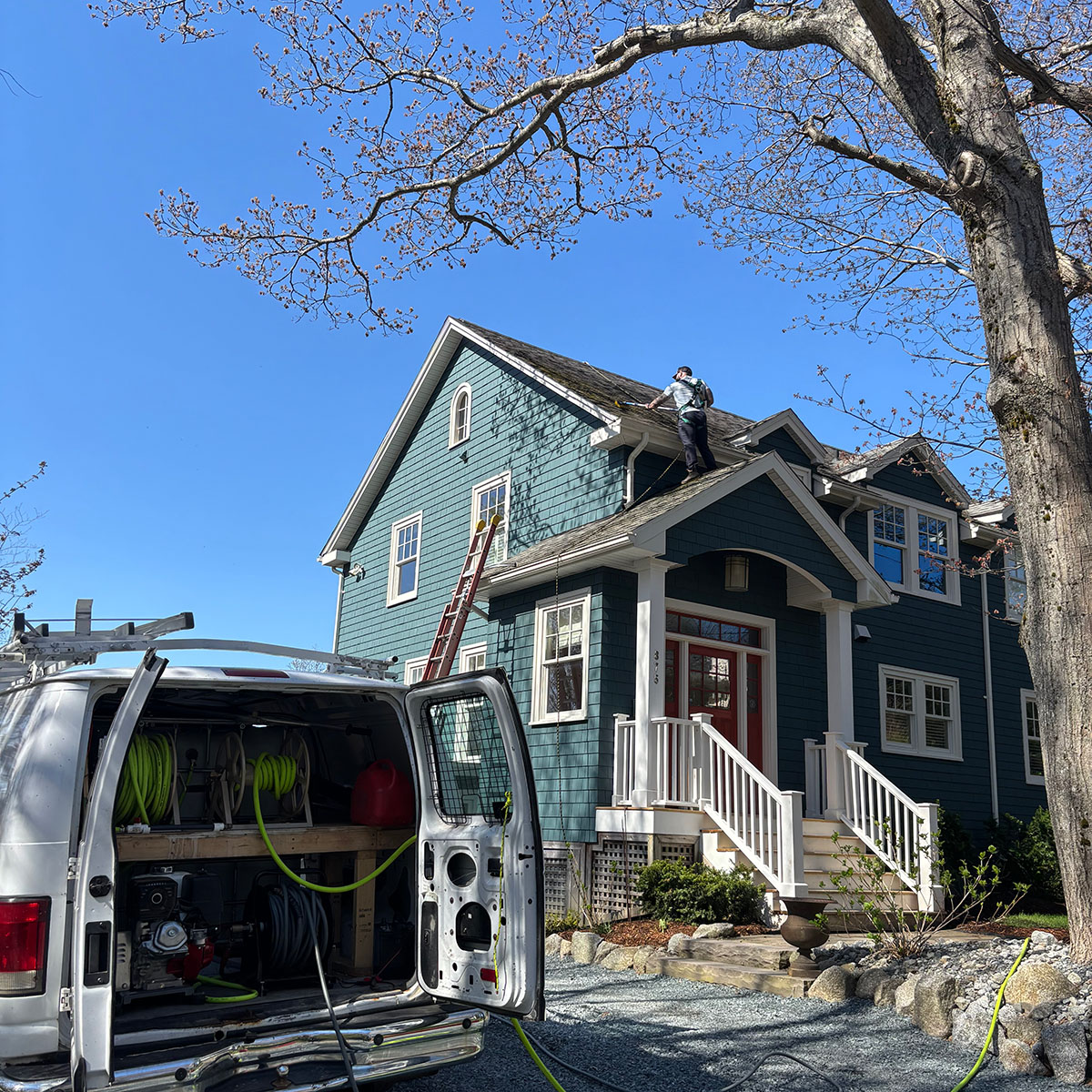
Why Choose ProCare Halifax
We offer professional roof cleaning across HRM, as well as South Shore communities like Hubbards, Chester, and Lunenburg. View our service areas.
- Halifax’s leading house wash specialists
- BBB Accredited • Insured • Certified fall-arrest
- House and plant safe soft wash methods with defined procedures
- Free estimates. Transparent scope and no pressure
- Bundled savings packages
House washing FAQ’s
Find answers to our frequently asked house washing Halifax questions by clicking on their titles below.
What’s the difference between house washing and pressure washing?
House washing (soft washing) uses low pressure and cleaning chemistry to remove organic growth and buildup from siding and trim. Pressure washing is higher force and is typically better suited for hard surfaces like concrete, depending on the situation.
Will soft washing damage my vinyl or wood siding?
No. Soft washing is the safest method for cleaning every type of siding, including vinyl, wood, stucco, and composite. Unlike traditional pressure washing, which can warp panels or strip paint, our low-pressure system relies on specialized cleaners to do the work without any force.
Can you remove black stains on siding?
In many cases, yes. Black streaks and dark staining are often organic growth or environmental buildup. Results depend on the surface and the cause, and we’ll set expectations up front.
What about green algae on my house?
Green algae is very common in Halifax’s humid, coastal conditions. Soft washing is one of the most effective ways to remove it and keep it from returning quickly.
Is your house washing process safe for my garden?
Yes. We take the protection of your landscaping seriously. Our “plant-first” protocol includes pre-rinsing all greenery with fresh water, using biodegradable cleaners, and a final thorough rinse to ensure your soil and plants remain healthy.
How often should I have my house soft washed?
Most clients enjoy a fresh, clean exterior for 12–24 months, depending on a few factors:
- How much sun your home gets
- Nearby trees or vegetation
- Siding type and age
Regular soft washing helps protect your siding and extends the time between deeper cleanings.
What is gutter brightening and do I need it?
Gutter brightening is an optional add-on that removes oxidation and tough discolouration from the face of your gutters. While our standard house wash clears away dirt and grime, some gutters develop deeper stains over time. This service helps restore their original shine for a cleaner, more polished look, especially if your gutters are white or light-coloured.