
You don’t really notice it at first.
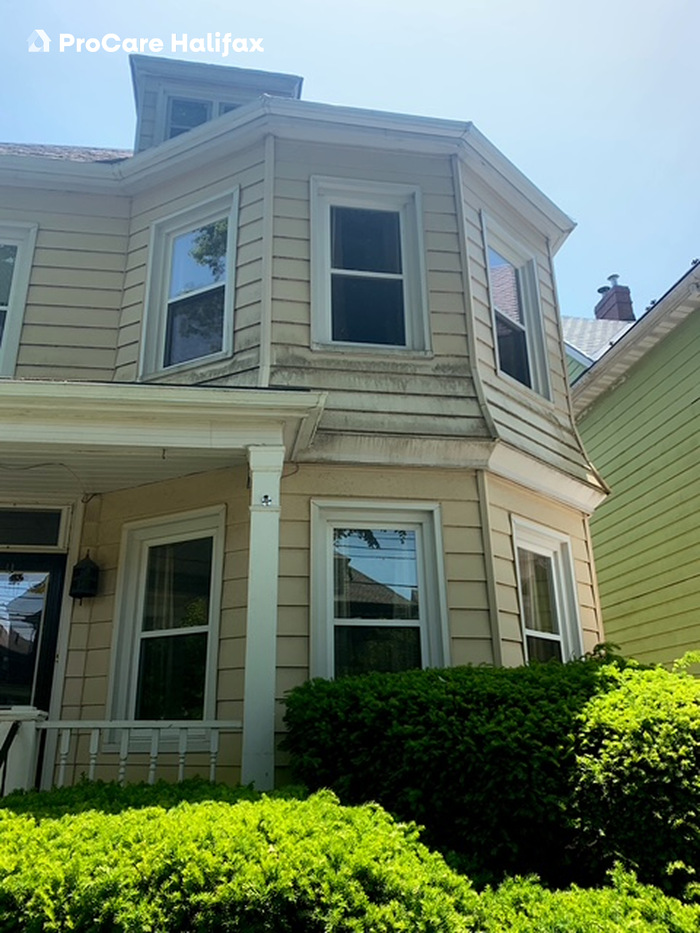
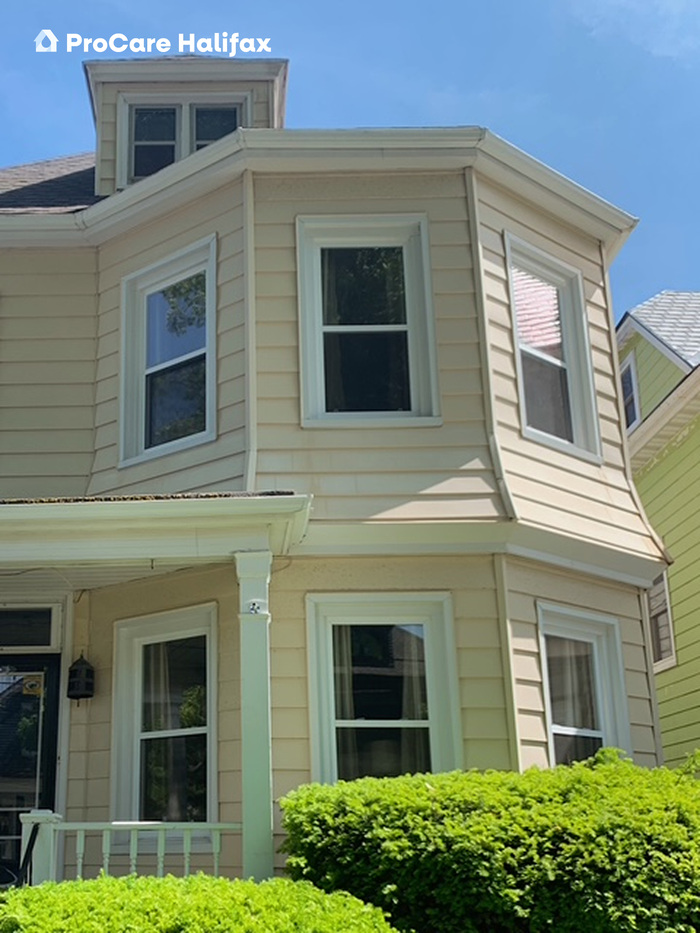
One spring, the house looks bright, the siding still holding that clean colour it had when it was new. Then a year goes by, maybe two, and you start to see it. A faint green haze on the north side. A dull film that won’t come off with the garden hose. Dark streaks under the eaves that weren’t there before.
Around Halifax, this happens to almost every home sooner or later.
It doesn’t mean your siding is cheap, and it doesn’t mean you did anything wrong. It just means you live in one of the dampest, saltiest climates in the country.
Your vinyl siding gets dirty faster here, and there’s a reason for it.
The East Coast air never really dries out
If you’ve lived in Nova Scotia long enough, you know the feeling. The air always has a bit of weight to it. Even on a sunny day, there’s moisture hanging around from the fog, the rain, or the ocean.
That moisture settles on everything outside your house. Your roof, siding, windows, decks, and fences. When the surface stays slightly damp, dust and pollen don’t just blow away. They stick.
Over time, that thin layer turns into the dull, grey film people start to notice on vinyl siding. It’s not one big storm that does it. It’s months of humidity, mist, and damp mornings building up a little at a time.
Homes near the Bedford Basin, the Northwest Arm, Purcells Cove, and coastal Dartmouth usually see it first, but even inland areas like Sackville and Hammonds Plains get the same buildup once the weather turns humid.
Salt air makes grime cling even harder
Living near the ocean has its perks, but your siding doesn’t love it.
The air around Halifax carries tiny particles of salt from the Atlantic. You can’t see them, but they settle on your house the same way they settle on your car after a windy day near the water.
Salt holds moisture, and moisture makes dirt stick. That means once your siding starts to get a little dirty, it stays dirty longer. Instead of washing away with the next rain, the grime hangs on and slowly builds into that chalky, streaked look a lot of homeowners notice after a few years.
This is especially common in places closer to the water, but the wind carries that salty air farther inland than most people think.
Green siding is usually algae, not dirt
That green tint you see on vinyl siding isn’t just mud or pollen.
Most of the time, it’s algae.
Algae spores travel through the air and land on siding all the time, but they only grow when the surface stays damp long enough. Halifax gives them exactly what they need: rain, fog, shade, and long stretches of humid weather.
The north side of the house usually turns first because it gets the least sun. Areas under trees, behind fences, or close to the ground stay wet longer, and that’s where the green patches start to spread.
You’ll see it all over neighbourhoods with mature trees like Fall River, Clayton Park, and older parts of Dartmouth, where airflow is limited, and the siding doesn’t dry as fast after rain.
Mold, mildew, and that dull chalky look
Not all dirty siding looks green.
Sometimes it turns grey. Sometimes it looks faded. Sometimes you get dark streaks under the soffits that come back no matter how many times you spray them off.
That’s usually a mix of mold, mildew, pollution, and plain old grime that’s been sticking to the siding for years.
High humidity makes it easier for mold and mildew to grow, especially in shaded areas. Once it starts, it spreads slowly across the surface, leaving that patchy, tired look that makes the whole house seem older than it really is.
It’s one of the reasons homes in Halifax often need exterior cleaning more often than houses in drier parts of Canada. The weather here just gives dirt more chances to hang around.
Why it keeps coming back
Many homeowners clean their siding once and expect it to stay that way for years.
In this climate, it rarely does.
Between the fog, the salt air, the rain, and the humidity, your house is constantly getting coated in a thin layer of moisture. Every time that happens, a little more dust sticks, a little more algae grows, and the siding slowly loses that clean look again.
It’s not neglect. It’s just what happens when you live this close to the Atlantic.
The good news
The buildup on vinyl siding usually isn’t permanent, and it doesn’t mean the siding needs to be replaced.
Most of the time, it just needs to be cleaned properly with the right method. Not blasted with high pressure, not scrubbed with a brush, but treated in a way that removes the algae, mold, and grime without damaging the finish.
That’s why professional soft washing is so common in Halifax. In a climate like this, it isn’t just about curb appeal. It’s part of regular home maintenance.
If you want to see how siding cleaning works or what your house might need, you can visit our vinyl siding cleaning page or request a free estimate anytime.
Why Choose ProCare Halifax
We offer professional roof cleaning across HRM, as well as South Shore communities like Hubbards, Chester, and Lunenburg. View our service areas.
- Halifax’s trusted house and exterior cleaning specialists
- Licensed, insured, and BBB-accredited professionals
- Soft wash methods safe for all siding types with defined procedures
- Eco-friendly treatments that protect your landscaping and surfaces
- Fall-arrest certified for safe work on two-story homes and elevated areas
- Free estimates with a transparent scope and no pressure
- Flexible bundled service packages for roof, home, decks, patios, and fences
House washing FAQ’s
Find answers to our frequently asked house washing Halifax questions by clicking on their titles below.
How much does house washing cost in Halifax?
For a standard 2,000 sq. ft. home with vinyl siding, moderate buildup, and good property access, you can expect to invest around $425.
☞ For a full breakdown of what affects pricing, read our House Washing Cost Guide.
Is house washing the same as pressure washing?
No. Professional house washing typically uses a soft wash process, which applies a cleaning solution at low pressure to safely remove algae, mildew, and buildup. High-pressure washing can force water behind siding and may damage surfaces if not used correctly.
How often should a house be washed?
Most clients enjoy a fresh, clean exterior for 12–24 months, depending on a few factors:
- How much sun your home gets
- Nearby trees or vegetation
- Siding type and age
Regular soft washing helps protect your siding and extends the time between deeper cleanings.
Why is my vinyl siding turning green?
Green staining on siding is usually algae growth caused by moisture and shade. Halifax’s coastal climate creates ideal conditions for biological buildup, especially on north-facing or tree-covered areas of a home.
Is house washing safe for vinyl, wood, or fiber cement siding?
No. Soft washing is the safest method for cleaning every type of siding, including vinyl, wood, stucco, and composite. Unlike traditional pressure washing, which can warp panels or strip paint, our low-pressure system relies on specialized cleaners to do the work without any force.
Can you remove black stains on siding?
In many cases, yes. Black streaks and dark staining are often organic growth or environmental buildup. Results depend on the surface and the cause, and we’ll set expectations up front.
Is your house washing process safe for my garden?
Yes. We take the protection of your landscaping seriously. Our “plant-first” protocol includes pre-rinsing all greenery with fresh water, using biodegradable cleaners, and a final thorough rinse to ensure your soil and plants remain healthy.
What is gutter brightening and do I need it?
Gutter brightening is an optional add-on that removes oxidation and tough discolouration from the face of your gutters. While our standard house wash clears away dirt and grime, some gutters develop deeper stains over time. This service helps restore their original shine for a cleaner, more polished look, especially if your gutters are white or light-coloured.